 Chat With UsChat With Us
By Nazish Shah • 5 January 2026
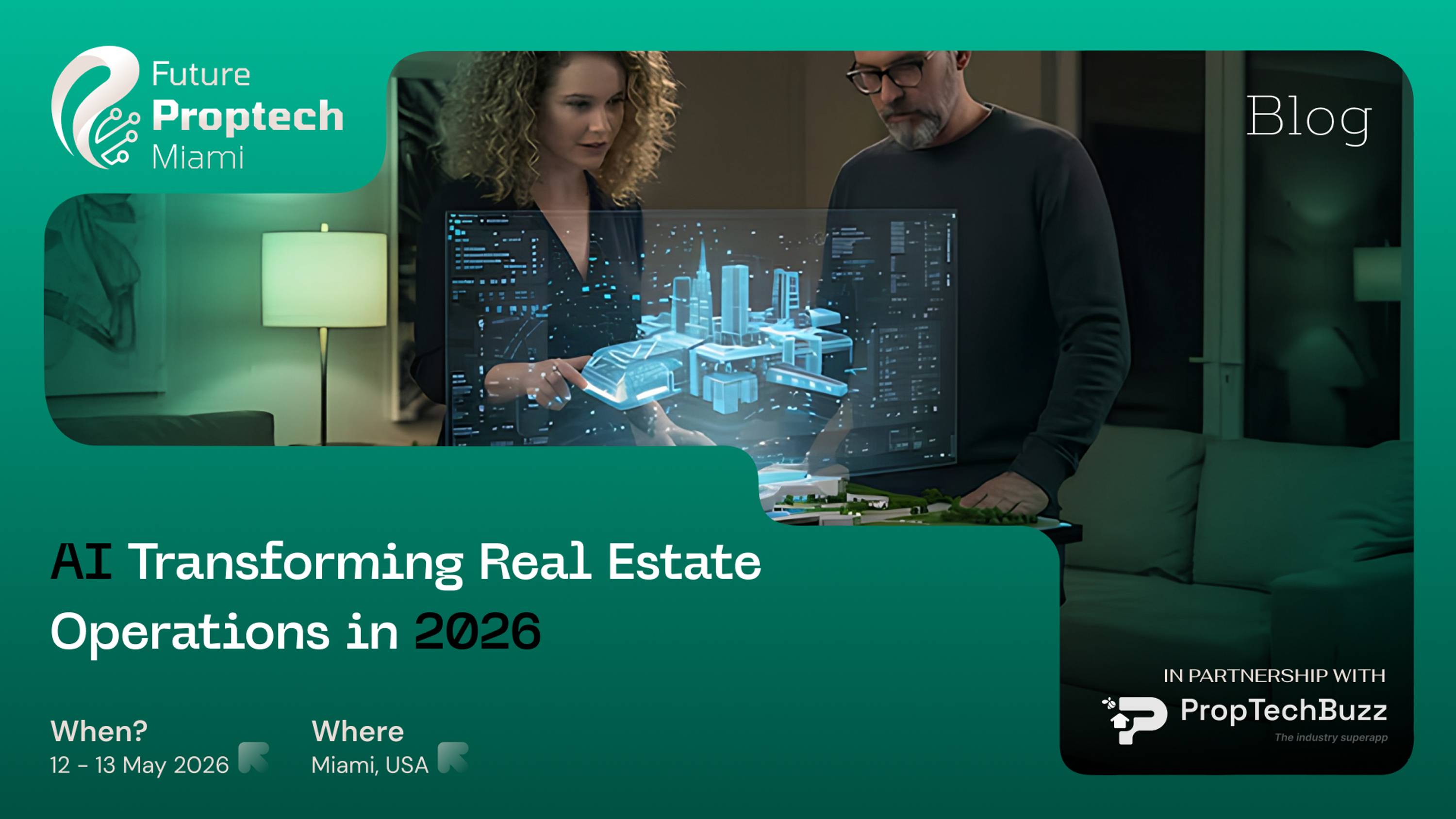
By 2026, artificial intelligence is no longer a futuristic concept in real estate, it is a core operational engine reshaping how properties are managed, marketed, valued, and experienced. What began as basic automation and data analysis has evolved into intelligent systems that learn, predict, and optimize decisions across the entire real estate lifecycle. From commercial towers to mixed-use developments and residential portfolios, AI is fundamentally redefining real estate operations.
One of the most significant shifts AI has brought to real estate operations is predictive intelligence. Instead of reacting to maintenance issues, tenant complaints, or market fluctuations, property owners and operators are now able to anticipate them. AI-powered platforms analyze historical data, sensor inputs, and real-time building performance to predict equipment failures, energy inefficiencies, and occupancy trends before they become costly problems. In 2026, predictive maintenance has become standard practice, helping operators reduce downtime, extend asset life, and significantly cut operational expenses.
AI has also transformed property management into a more seamless and tenant-centric experience. Intelligent virtual assistants and AI chatbots now handle a large portion of tenant interactions, including service requests, lease inquiries, payments, and onboarding. These systems operate 24/7, respond instantly, and continuously improve through machine learning. As a result, property managers are freed from repetitive tasks and can focus on higher-value responsibilities such as tenant retention, community building, and strategic planning. For tenants, this means faster responses, personalized communication, and smoother day-to-day interactions with their buildings.
Leasing and marketing operations have undergone a dramatic evolution as well. In 2026, AI-driven marketing engines analyze user behavior, demographics, location data, and market trends to create highly targeted property campaigns. Listings are automatically optimized with dynamic pricing, personalized messaging, and AI-enhanced visuals that resonate with specific tenant profiles. AI tools can predict which prospects are most likely to convert, allowing leasing teams to prioritize high-intent leads and shorten vacancy periods. This level of precision has transformed leasing from a reactive process into a proactive, data-led strategy.
Another major area of transformation is investment and portfolio management. AI-powered analytics platforms now process massive datasets spanning market conditions, economic indicators, climate risk, tenant behavior, and asset performance. In 2026, investors rely on AI not only to evaluate assets but to simulate future scenarios, assess risk exposure, and optimize portfolio allocation in real time. This shift has made decision-making faster, more accurate, and less dependent on intuition alone. AI has become a critical tool for institutional investors, REITs, and developers navigating increasingly complex global markets.
Sustainability and energy management represent one of AI’s most impactful contributions to real estate operations. As ESG requirements and environmental regulations tighten worldwide, AI systems are playing a central role in monitoring, optimizing, and reporting sustainability performance. Smart buildings now use AI to dynamically control lighting, HVAC systems, water usage, and energy storage based on occupancy patterns and external conditions. In 2026, sustainability is no longer a compliance exercise, it is an intelligent, automated function that improves both environmental impact and financial performance.
Construction and asset development have also been reshaped by AI integration. AI-driven construction management tools are now used to forecast project timelines, manage supply chains, detect design clashes, and improve on-site safety. Computer vision systems monitor construction sites in real time, identifying risks and inefficiencies before they escalate. These innovations have reduced cost overruns and delays, making development processes more predictable and resilient in an industry historically known for uncertainty.
Perhaps most importantly, AI is enabling a shift toward truly intelligent buildings through digital twins and real-time operational modeling. Digital replicas of physical assets allow operators to test scenarios, optimize layouts, and manage complex systems remotely. In 2026, digital twins are no longer experimental tools, they are operational necessities for large-scale commercial and urban developments, especially in smart city ecosystems.
As AI continues to mature, the role of real estate professionals is also evolving. Rather than replacing human expertise, AI is augmenting it. The most successful organizations are those that combine domain knowledge with intelligent systems, creating operations that are faster, smarter, and more adaptable. In this new era, real estate is no longer just about buildings, it is about data, intelligence, and experience.
Looking ahead, AI will remain at the center of PropTech innovation, driving efficiency, transparency, and sustainability across the built environment. For industry leaders, developers, and technology innovators, 2026 represents not just a technological shift, but a strategic opportunity to redefine how real estate operates in a digitally intelligent world.